“The lessons I learned took effect slowly and often weren’t recognized until years later.” — Robin Olds
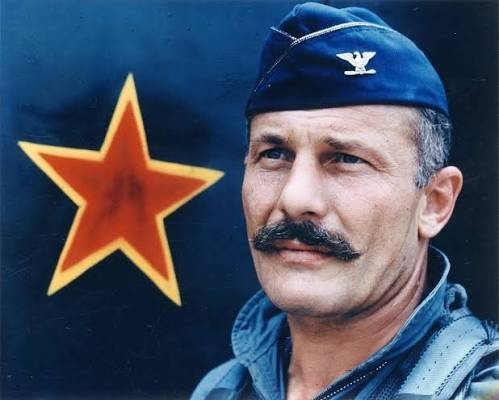
October 2003. I was a Lieutenant attending Introduction to Fighter Fundamentals (IFF). It happened to coincide with a reunion for the legendary 435th Fighter Squadron.
As a young aspiring fighter pilot—although I wasn’t all that young by then—I found myself surrounded by greatness. Pilots who had flown in different wars, different eras, and under circumstances I could barely comprehend. Men whose reputations had become part of fighter pilot history.
We all had something in common. We wanted to be the best fighter pilots possible.
At least we thought we knew what that meant.
As the evening went on, pilot after pilot stood up to speak. Stories were told. Lessons were shared. The room got louder. Drinks were flowing. The crowd became increasingly difficult to control.
Then it happened.
A man walked toward the microphone, looked across the room, and in a voice that instantly commanded everyone’s attention shouted:
“SHUT THE FUCK UP!”
The room froze.
It was Robin F****** Olds.
I don’t remember much of what he said after that.
Honestly, it didn’t matter.
For a room full of fighter pilots and fighter pilots in training, we were in the presence of a legend. Not because of his rank. Not because of his decorations. Not because of the stories.
Because he had something you can’t fake.
Presence.
Leadership.
Credibility.
Years later, I came across one of his quotes that resonates with me far more today than it did when I first heard it:
“A fighter pilot is an attitude. It is cockiness. It is aggressiveness. It is self-confidence. It is a streak of rebelliousness, and it is competitiveness. But there’s something else. There’s a spark. There’s a desire to be good. To do well in the eyes of your peers.”
— Brigadier General Robin Olds (Ret.)
When I was younger, I focused on the first half of that quote.
The cockiness.
The aggressiveness.
The confidence.
The rebelliousness.
I thought those were the things that made fighter pilots different.
After nearly twenty-three years in uniform, most of it spent flying the A-10, I’ve come to believe the most important part of the quote is at the end.
“There’s a desire to be good. To do well in the eyes of your peers.”
That’s the part that lasts.
Back in 1999, while applying to the Air Force, Air National Guard, and Air Force Reserve—after the Marine Corps politely told me, “No thanks”—I was mailed a handout titled, So You Want to Be a Fighter Pilot? At the time, I thought it was a guide to becoming a fighter pilot.
Looking back after nearly twenty-three years in uniform, I realize it was asking a much bigger question.
What I thought was a profession built on confidence eventually revealed itself to be a profession built on accountability.
What I thought was about individual achievement turned out to be about trust.
What I thought was about being the best pilot in the room became a lesson in helping everyone around you perform at a higher level.
Anybody can learn procedures.
Anybody can memorize checklists.
Anybody can wear a patch.
The best fighter pilots I’ve known were rarely defined by any of those things.
The ones I respected most took responsibility when things went wrong. They remained calm when situations became chaotic. They protected their people. They demanded excellence without demanding perfection.
Most importantly, they never stopped learning.
That’s what surprised me.
The longer I stayed in fighter aviation, the less impressed I became with raw talent and the more impressed I became with character.
Robin Olds understood that.
The Air Force didn’t always love him because he wasn’t interested in being a robot. He wasn’t interested in checking boxes simply because someone told him to. He cared about the mission. He cared about winning. He cared about the people he led.
That’s why pilots still talk about him decades later.
Nobody remembers regulations.
People remember leaders.
Looking back now, I think that’s what young fighter pilots often misunderstand.
Being a fighter pilot isn’t about proving you’re the toughest person in the room.
It’s about becoming the person others trust when things go wrong.
The mission matters.
Your people matter.
Your character matters.
And eventually you discover something even more important.
The qualities that make a great fighter pilot are the same qualities that make a great husband, father, teammate, friend, and leader.
Some people learn that lesson early.
Some of us learn it the hard way.
Looking back, the older I get, the more I think Robin Olds had it right. The confidence, aggressiveness, and competitiveness get all the attention.
But the part that endures is the desire to be good.
To earn the respect of the people beside you.
To become someone worth following.

Nineteen years after Robin Olds passed away, I found myself standing at his gravesite at the United States Air Force Academy, even though he was actually a West Point graduate long before the Air Force Academy even existed.
It was a very different experience than sitting in that reunion as a young lieutenant in 2003.
Back then, I saw a legend.
Standing there years later, after deployments, command opportunities, promotions, failures, successes, marriage, divorce, fatherhood, and nearly twenty-three years in uniform, I saw something different.
I saw a man who left a mark.
Not because of his rank.
Not because of his aircraft.
Not because of his mustache.
Because generations of fighter pilots are still talking about him long after he’s gone.
Very few people leave that kind of legacy.
As I stood there, I reached into my pocket and left a nickel on the grass.
If you’ve never been around fighter aviation, that probably seems like an odd thing to do. For fighter pilots, it isn’t.
I’d heard the phrase my entire career—“Throw a nickel on the grass, save a fighter pilot’s ass.” Like so many traditions in our community, you learn it long before you truly understand it. What began as a fighter pilot song from the Korean War eventually became one of the highest signs of respect we can pay to a fellow fighter pilot who has flown west. It’s our way of saying, “We remember. You mattered.”
Standing there, that nickel wasn’t about tradition.
It was about gratitude.
Gratitude that, back in 2003, I had the privilege of hearing Robin Olds tell stories, sing the old fighter pilot songs, and witness the presence of a man whose legacy still influences our community today.
Gratitude for the leaders who came before us.
For the culture they built.
And for the example they left behind.
Standing there, I couldn’t help but think that maybe that’s the real lesson.
Not how many hours you fly.
Not how many medals you earn.
Not what aircraft you flew.
But whether the people who follow you are better because you were here.
That’s what I remember after twenty-three years.
And that’s what I hope the next generation learns sooner than I did.
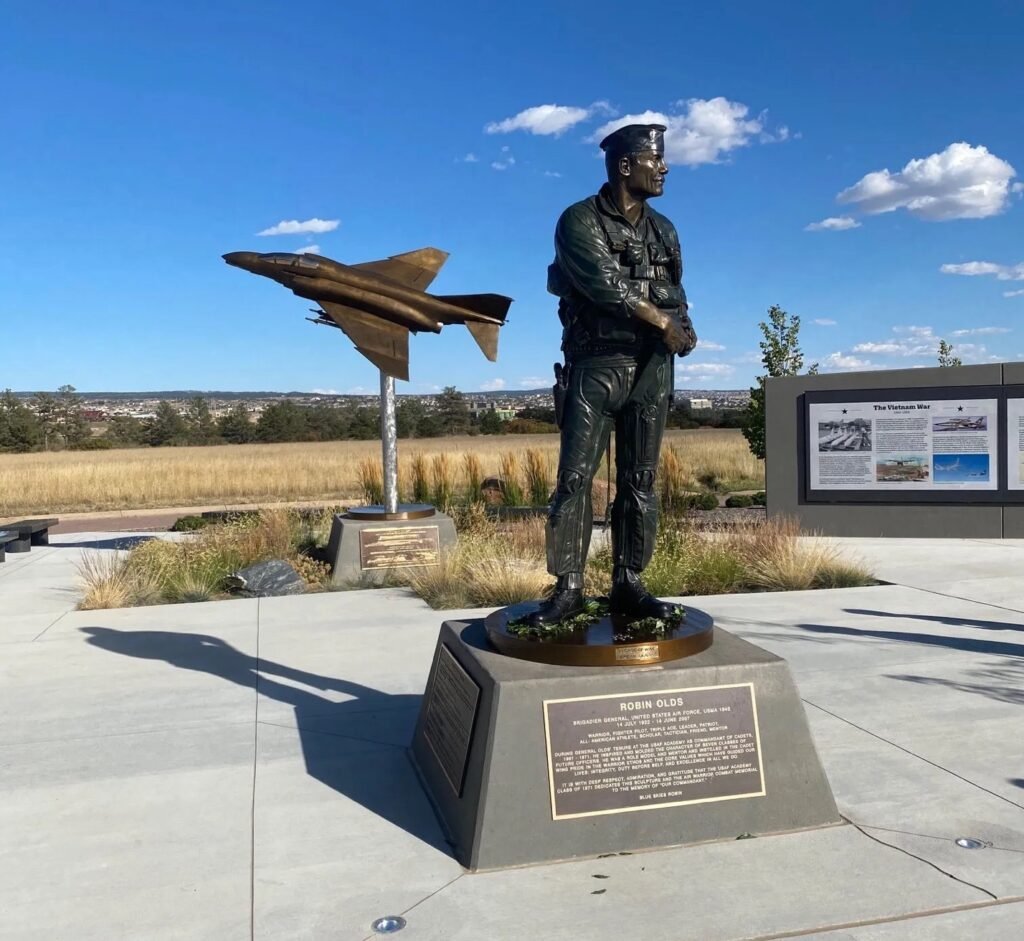
Final Debrief
Young pilots often ask what it takes to become a fighter pilot.
The answer is simpler than they expect.
Master your craft.
Stay humble.
Take care of your people.
Lead from the front.
And never confuse confidence with character.
Because at the end of the day, flying fighters isn’t what makes you exceptional.
Who you become while doing it is what matters.
Attack!
Gopher